Showing posts with label nature. Show all posts
Thursday, April 04, 2013
Joyfully Growing Healthy Fruit
Here I go again, posting about fruit and especially berries!!!
My Jan. and Feb. 2013 posts were on the same topic,
as well as this recent post: http://suescottagegarden.blogspot.com/2012/06/wonderful-wonderful-raspberries-and.html.
I guess I just cannot say enough about this wonderful gift that mother nature provides for us.
Not just fresh fruit salad (a traditional, healthy dessert), but fruit as a snack or for breakfast is not only delicious, it is nutritious, too. The natural antioxidants and fiber of fresh fruit support the body's defenses and help to keep it running smoothly. When adding fruit to your diet, consider including the following choices, which according to the USDA, are fruits that are exceptionally high in antioxidants:
Wild blueberries
Cranberries
Blackberries
Prunes
Raspberries
Strawberries
Red delicious apples
Granny Smith apples
Sweet cherries
Black plums
This list is not all inclusive, since many other red to black fruits also are considered antioxidant rich fruits. Fruit on a little cottage cheese is one of my favorites. I especially like blueberries (homegrown) or local organic, blackberries and raspberries homegrown, as well as other homegrown berries. I love most berries for baking, and especially cranberries and blueberries (scones are a favorite).
Berries are so easy to grow and care for in the home garden. They are forgiving if you ignore them. You just don't want to ignore them during the harvesting seasons, or you will miss out on some great tastes. I try not to munch too much when harvesting with my little berry basket hanging from my arm.
What is your favorite fruit? Your favorite berries? Think of what you get for very little input of energy. How do you use and/or preserve your harvest? Jams?, Frozen individually and put in freezer containers/bags for easy access? Do you dry your berries, and put a little pin prick in each one so the center dries and they don't mold later? Or do you just eat all your berries fresh out of the garden and share them with family, friends, neighbors? Whatever you do, growing berries will bring joy.
Labels:
eating locally,
gardening,
growing food,
healing,
health,
nature,
sustainability
Friday, January 04, 2013
Vermicomposting
We first got our Worm Factory Worm Bin in July right after the holiday. We set-up our bin on July 8th and on the 10th our live worms (Eisenia fetida or red wigglers) arrived in a relatively small cardboard box with holes punched all around it.
I hurried to the door soon after it was delivered around 4pm to retrieve it from the hot front porch. The high temperature was 106 degrees that afternoon. That was the hottest day we had had. Very unfortunate. I know the mail trucks don't have air-conditioning. We had watched the Worm Factory video about vermicomposting and we knew that the worms handle cool temperatures much better than warm and 106 degrees is very hot - too hot for the red wigglers.
After bringing them into the house and opening the cardboard box to cool down for awhile, I opened the sack they came in and poured them into their new home. They were pretty limp and not active. Now was the watch and wait period to find out if they could recover from a horrendous mail trip like that. My take on it is that many of them (1000 to start I think) did not make it. After their rest period they did not go through the handful of kitchen scraps as expected. It has been very slow going.
We bought the 5 tray Worm Factory bin and of course started with one tray. Finally in Sept.-Oct. we graduated to two trays, with the first tray still containing egg shells with what we hoped were nests of babies and also some material that was still not completely broken down.
Finally in December, after adding a third tray, I was able to make my first harvest of our very own worm castings. This is one trays worth of worm castings. This is so exciting!
The worm bin and its contents are so fresh. It smells good - a very very mild earthy scent and feels good in the hands. The small pieces that are not dark brown in the mixture are pieces of egg shells (brown eggs). I crushed many of the shells, but also added some that were half shells as well as small pieces. Part of the mix sent with the Worm Factory kit included some small pumice rocks which a couple can still be seen. No other material is evident in our very first harvest of worm castings. Pumice rock and Coconut coir block for worm bedding came with the bin, as well as a thermometer, a scraper and the yellow rake shown in the picture above.
Below is some great information from the Worm Factory - there is a difference between Vermicompost and worm castings.
First you need to determine if you have true worm castings, or vermicompost. What's the difference?
Worm castings are essentially worm poop. Worm castings are the result of the red wiggler worm eating the decomposed organic matter and passing it through their gut.
Vermicompost is a combination of worm castings, decomposed, and/or partially decomposed organic matter that has not yet been processed by the worms. Vermicompost may contain some organic matter that is still identifiable. Generally, vermicompost will mostly be made up of worm castings. However, if you still have a small amount of decomposing organic matter it will decide how you store your vermicompost.
The partially decomposed organic matter in vermicompost continues to break down during storage. If you store actively decomposing organic matter in an airtight container it will cause anaerobic decomposition, which results in foul-smelling, plant-toxic by-products. Also if the vermicompost dries out it prevents further decomposition, and often causes it to become impossible to re-wet (hydrophobic).
The best way to store vermicompost is to first dry it until it is damp, not wet. This will ensure sufficient air penetration through the material to prevent anaerobia. Once it is damp, you will want to store it in a non-airtight container. If you store it this way the vermicompost slowly stabilizes in an aerobic environment and has a shelf life of more than three years.
Storing true worm castings is much easier, since they are essentially stable and can be both stored in airtight packages and dried to 5% moisture with no loss of plant growth impact.
In order to test if you have vermicompost or true worm castings you can seal a small handful in an airtight plastic bag. When you open the bag after a few days and it smells like deep, earthy soil, then you have worm castings. If it smells putrid and foul then you have vermicompost and should be stored in a non-airtight container.
Labels:
beneficials,
environment,
gardening,
health,
nature,
organic gardening,
soil,
sustainability,
worms
Wednesday, March 21, 2012
Is Spring really here?
The Vernal Equinox
Ah, it is spring! The Vernal Equinox, which is the beginning of Spring in the Northern Hemisphere was on March 20, 2012, at 1:14 A.M. (EDT).The word equinox is derived from the Latin words meaning “equal night.” The spring and fall equinoxes are the only dates with equal daylight and dark as the Sun crosses the celestial equator.
It is this season that brings increasing daylight, warming temperatures, and the rebirth of our flora and fauna.
Spring is all about "new" - new life and growth!
According to folklore, you can stand a raw egg on its end on the equinox. Is this true?
One spring, at the minute of the vernal equinox, (Pacific Time) I tried this. For about 1/2 the day my egg stood on its own end, then I took it down. Try this yourself and let me know what happens!
We can all envision what we think of when spring arrives. Maybe it is the tender new light green growth we see, or the smell of warming soil or a flower in bloom, the feel of warm rain or a light breeze.
Spring is also the time when green buds appear and blooms cover many trees, birds are active and insects buzz by, and flowers begin to bloom. Daffodils, Lily of the Valley, and other spring flowers provide a sight for sore eyes after a long cold gray winter.
The vernal, or spring, equinox signals the beginning of nature’s renewal in the Northern Hemisphere.
Gardeners have been waiting for this day to arrive. Winter provides lots of time to dream, to look through garden catalogs and decide what new things to grow this year. This is spring, the beginning of a new growing season and a time to again be in harmony with Mother Nature.
Labels:
bees,
beneficials,
environment,
nature,
spring-garden
Sunday, June 19, 2011
Finally planting a Spring garden in May and June
So we finally got some spring weather about three weeks ago, which came right after our full day of hail! Mother Nature is not happy! It sure is very evident this year with all this crazy weather and events around the world.
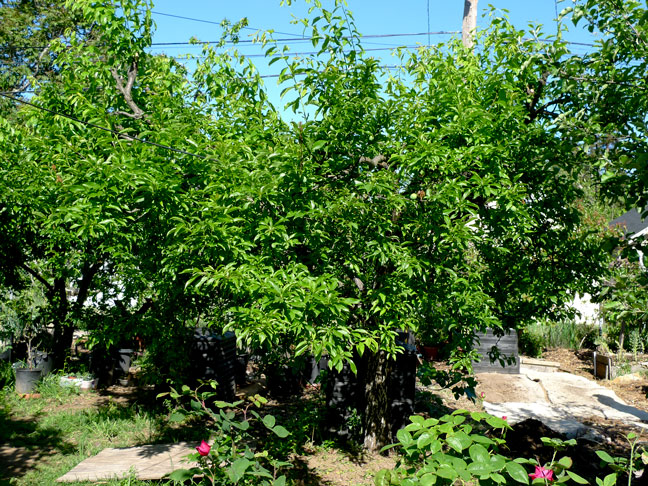
Alright, back to my little piece of nature. We have a city lot with some very old fruit trees and many I planted years ago. The (white) fig tree was planted in 1920 and the Santa Rosa plum was planted some time between 1920-1950. There are two Loquots, one old and another was a baby volunteer, a Meyer and Eureka lemon tree, a pink grapefruit tree, a large Bay tree, Vitex tree, and Elder tree. There is a three year old Suncrest peach, a two year old Fantasia nectarine and a two year old Royal Blenheim apricot (replacing my old 25yr. old apricot that died a couple years ago).
We have several blackberry plants in several beds and this picture shows some of their pretty flowers that will bring fruit soon.
The raspberry bed is shown below. I have had it for several years and it is finally acting happy. Hope it bears well this year. I think I love raspberries best of all!
This next picture is of our new boysenberry bed, planted in mid April. This picture was taken 13 days ago and the plants have filled out significantly since then. I haven't built the supportive structure to hold up the vines yet. All the berries are doing well this year.
My red potatoes are looking really good in this picture. You can see the Calendula (yellow flowers) in the background. Calendula is a wonderful healing herb. Really good for the skin.
The bush beans (below) were planted as young starters. They sat here doing nothing for a couple hot weeks, but now they have buds and are happy. Since this picture, I had to separate them more, because when I planted them I thought they were climbing beans which can be planted closer together.
So this is a little abbreviated inventory of some of my sustainable urban gardens.
Alright, back to my little piece of nature. We have a city lot with some very old fruit trees and many I planted years ago. The (white) fig tree was planted in 1920 and the Santa Rosa plum was planted some time between 1920-1950. There are two Loquots, one old and another was a baby volunteer, a Meyer and Eureka lemon tree, a pink grapefruit tree, a large Bay tree, Vitex tree, and Elder tree. There is a three year old Suncrest peach, a two year old Fantasia nectarine and a two year old Royal Blenheim apricot (replacing my old 25yr. old apricot that died a couple years ago).
We have several blackberry plants in several beds and this picture shows some of their pretty flowers that will bring fruit soon.
The raspberry bed is shown below. I have had it for several years and it is finally acting happy. Hope it bears well this year. I think I love raspberries best of all!
This next picture is of our new boysenberry bed, planted in mid April. This picture was taken 13 days ago and the plants have filled out significantly since then. I haven't built the supportive structure to hold up the vines yet. All the berries are doing well this year.
My red potatoes are looking really good in this picture. You can see the Calendula (yellow flowers) in the background. Calendula is a wonderful healing herb. Really good for the skin.
The bush beans (below) were planted as young starters. They sat here doing nothing for a couple hot weeks, but now they have buds and are happy. Since this picture, I had to separate them more, because when I planted them I thought they were climbing beans which can be planted closer together.
So this is a little abbreviated inventory of some of my sustainable urban gardens.
Saturday, May 21, 2011
Planting the vegetable garden and wildlife
Every season that I put in a new crop I mulch the bed, stake the starters, lay a few sticks across the bed to keep out any cats and look at my new beautiful bed with awe.
This month has been a different story.
My cat is a house cat, because cats threaten and kill wildlife. I welcome wildlife on my property. I share figs, grapes, loquats, and plums with squirrels and many varieties of birds. Possums come through here but do no damage and the raccoons wash their hands in my water features which can make it a little muddy, but they do no damage. Many birds are nesting right now and there is a army of cats that belong to neighbors (or no) that is patrolling our neighborhood. I used to tell them that they were welcome to sit in the sun in my yard, but no more. This year they took advantage of my good spirit.
I didn't start planting my heat loving vegetables until almost two weeks ago. I started with peppers, because even though we were still getting this unusual cold, they always seem to be forgiving of the weather. So, the long pepper bed was planted with the Habaneros, Jalapenos, Poblano, Anaheim, all the way down the hotness scale to Sweet Bell's or California Wonder Bell peppers.
Oh, I always love my pepper bed. It is a raised bed so I am able to crowd them in together a little and knowing the growth habits of the different varieties allows me to know who needs a little more room. I am a pepper queen, as they always do so well. They will keep producing until sometime after Thanksgiving or after Christmas in a mild weather year.
Of course they are planted with organic everything - my own compost and mulch (leaves and compost that isn't as broken down). We do have good soil to start with, river bottom soil as the river is just about a mile away. And they like getting only partial day full sun, but late afternoon shade in our hot California summers.
Back to the kicker!
After I plant a new bed I just enjoy watching it, but the next morning I went out to look at my beautiful bed and found a place where digging had occurred, the mulch was piled in an unusual pile. Immediately upon inspection I found the culprit was a cat. Cat feces are not healthy in an edible garden or any garden. Many people try: Cayenne pepper (works until the first rain washes it away) or mothballs (toxic), wiring up a low-current (non-lethal) fence or motion sensor water gun (very expensive). Cats HATE to poop in anything that is wet or step on anything that sticks to or pokes their feet, so some people use chicken wire. My neighbor Cindy resorted to chicken wire. The problem is you can't keep adding mulch or you are just covering the chicken wire and then it is useless and when your plants grow up you can't take the chicken wire out of the bed for the rest of the season.
My method of laying a few branches (saved from pruning) like "pick up sticks", did not work. So I decided to make the bed indestructible to cats. It looks like one of those torture beds seen in films from ancient times. No cat is going to want to come near my peppers anymore. Of course, once the plants fill out I can remove the weapons of torture. Unfortunately is does not look like a perfect Sunset Magazine bed, but it is a real way to keep your beds from becoming contaminated with cat poop!
For some reason it is hard to see the vertical sticks sticking up all over the bed. It is more evident on my paste tomato bed filled with Amish paste and Sausage paste tomatoes which a I planted a couple days after the peppers.
The tomato cage helps to keep them out too. It is hard to see the cage, but it is homemade (out of heavy wire fencing with 6" openings) and has been used for more than 20 years. So, this was an easier bed to secure. Here is a close-up below of the mass of upright sticks!
It also helps to have lots and lots of sticks/stakes. They are useful for all kinds of things in the garden, from this deterring cats use, to staking and supporting new starts, supporting plants laden with heavy fruit, to becoming the uprights for shade cloths (I just use a staple gun to hold the shade cloth to the stakes) during different times when a plant maybe stressed from the sun.
This month has been a different story.
My cat is a house cat, because cats threaten and kill wildlife. I welcome wildlife on my property. I share figs, grapes, loquats, and plums with squirrels and many varieties of birds. Possums come through here but do no damage and the raccoons wash their hands in my water features which can make it a little muddy, but they do no damage. Many birds are nesting right now and there is a army of cats that belong to neighbors (or no) that is patrolling our neighborhood. I used to tell them that they were welcome to sit in the sun in my yard, but no more. This year they took advantage of my good spirit.
I didn't start planting my heat loving vegetables until almost two weeks ago. I started with peppers, because even though we were still getting this unusual cold, they always seem to be forgiving of the weather. So, the long pepper bed was planted with the Habaneros, Jalapenos, Poblano, Anaheim, all the way down the hotness scale to Sweet Bell's or California Wonder Bell peppers.
Oh, I always love my pepper bed. It is a raised bed so I am able to crowd them in together a little and knowing the growth habits of the different varieties allows me to know who needs a little more room. I am a pepper queen, as they always do so well. They will keep producing until sometime after Thanksgiving or after Christmas in a mild weather year.
Of course they are planted with organic everything - my own compost and mulch (leaves and compost that isn't as broken down). We do have good soil to start with, river bottom soil as the river is just about a mile away. And they like getting only partial day full sun, but late afternoon shade in our hot California summers.
Back to the kicker!
After I plant a new bed I just enjoy watching it, but the next morning I went out to look at my beautiful bed and found a place where digging had occurred, the mulch was piled in an unusual pile. Immediately upon inspection I found the culprit was a cat. Cat feces are not healthy in an edible garden or any garden. Many people try: Cayenne pepper (works until the first rain washes it away) or mothballs (toxic), wiring up a low-current (non-lethal) fence or motion sensor water gun (very expensive). Cats HATE to poop in anything that is wet or step on anything that sticks to or pokes their feet, so some people use chicken wire. My neighbor Cindy resorted to chicken wire. The problem is you can't keep adding mulch or you are just covering the chicken wire and then it is useless and when your plants grow up you can't take the chicken wire out of the bed for the rest of the season.
My method of laying a few branches (saved from pruning) like "pick up sticks", did not work. So I decided to make the bed indestructible to cats. It looks like one of those torture beds seen in films from ancient times. No cat is going to want to come near my peppers anymore. Of course, once the plants fill out I can remove the weapons of torture. Unfortunately is does not look like a perfect Sunset Magazine bed, but it is a real way to keep your beds from becoming contaminated with cat poop!
For some reason it is hard to see the vertical sticks sticking up all over the bed. It is more evident on my paste tomato bed filled with Amish paste and Sausage paste tomatoes which a I planted a couple days after the peppers.
The tomato cage helps to keep them out too. It is hard to see the cage, but it is homemade (out of heavy wire fencing with 6" openings) and has been used for more than 20 years. So, this was an easier bed to secure. Here is a close-up below of the mass of upright sticks!
It also helps to have lots and lots of sticks/stakes. They are useful for all kinds of things in the garden, from this deterring cats use, to staking and supporting new starts, supporting plants laden with heavy fruit, to becoming the uprights for shade cloths (I just use a staple gun to hold the shade cloth to the stakes) during different times when a plant maybe stressed from the sun.
Labels:
eating locally,
gardening,
growing food,
health,
nature,
organic gardening,
pruning,
soil,
spring-garden,
sustainability
Thursday, May 05, 2011
2011 May Day East Sac Garden Tour - for gardeners by gardeners
We had a gorgeous day for a garden tour, yet it did feel warm around noon. We chose an earlier date for the tour this year to highlight different gardens, and also different plants that are in their best form. We showed 7 East Sacramento Gardens. All these gardens are cared for by their owners with love and dedication. The love and hard work showed in the beauty we were able to observe.
We started out at Nina's with her unique sustainable gardens and orchard.
Next we visited Anita's fantastic rose gardens and other perennials. The senses were also filled with the wonderful smells.
Cindy's gardens were next with her rose arbor and perennials. Her garden also demonstrates cooperation as she has a vegetable garden on her neighbor's back property.
Kim's gardens were filled with wonderful plant diversity focusing on shape, form and color. Always changing and interesting.
Then we visited my gardens. Here is a front yard bed with various perennials in a shady bed.
Next were Dave's special garden rooms. We are leaving one garden room and entering another in this photo.
And lastly we visited Noelle's pretty gardens.
The tour was a real success. We all had fun visiting and sharing and we all gained information and ideas to incorporate into our knowledge base and possibly our gardens along the way.
We started out at Nina's with her unique sustainable gardens and orchard.
Next we visited Anita's fantastic rose gardens and other perennials. The senses were also filled with the wonderful smells.
Cindy's gardens were next with her rose arbor and perennials. Her garden also demonstrates cooperation as she has a vegetable garden on her neighbor's back property.
Kim's gardens were filled with wonderful plant diversity focusing on shape, form and color. Always changing and interesting.
Then we visited my gardens. Here is a front yard bed with various perennials in a shady bed.
Next were Dave's special garden rooms. We are leaving one garden room and entering another in this photo.
And lastly we visited Noelle's pretty gardens.
The tour was a real success. We all had fun visiting and sharing and we all gained information and ideas to incorporate into our knowledge base and possibly our gardens along the way.
Labels:
eating locally,
gardening,
growing food,
nature,
spring-garden,
sustainability
Friday, April 08, 2011
It is April already!!!
It seems quite strange to just now be getting out into the garden this year! I had a four month job developing a huge website with no time for fun free-time activities, let alone for the garden or normal chores. So, here I am checking out my yard to see how my precious plants have survived this very long cold and hard winter.
Many plants are bursting out with new life. Yea! We have had a couple gorgeous days and the honey bees are very busy in my gardens. I sure wish everything had been pruned before this. I am doing some catch-up pruning of vines and other over-due chores.
A few invaders have decided to take over where my mulch has been utilized by the microherd and is almost showing the soil now. Well it would be showing soil if the oxalis and cleavers hadn't filled in these places. So, I have spent 5 hours over a few days earlier in the week pulling out these two invaders who thought they were 'home free' in my gardens. No, it is not gone, not by a long shot, but several beds are looking good enough to get another layer of mulch for this season or even the year depending on sun exposure and how fast it breaks down.
Yesterday, my friend Nina gave me a bunch of boysenberries canes ready to plant; that were in need of being planted soon. So, today, instead of continuing my battle with the invaders in fully developed beds, I developed a new berry bed. I had been thinking about starting this bed for the last year. This bed is on the west side of the yard and is next to the raspberry bed. The soil is nice in this new bed which hadn't grown anything productive for years. Many years ago it used to be my main vegetable garden; now abandoned for the wooden raised vegetable beds I built towards the back of my property. These beds have lasted for 25 years. This year I will need to replace a board or two on a couple of them, but the redwood has held up quite well over the years.
Back to the boysenberries. So, I got 4 canes planted before it was time to call it quits today. Tomorrow the rest will be planted and I will come up with a structure to support the new plants. My friend Kim was such a help today, she is a hard worker. Working with a buddy is very inspirational. The time flies by that way.
Ever wonder why gardeners are always such a happy group??? Well, there is a bacteria in the soil that actually generates Serotonin in our brains. It is said that this works better than Prozac and we have all heard about a town where the citizens went on Prozac to be happy. So one of the best things about gardening is the concept of being sustainable by growing food, having a beautiful garden bed full of life, getting some good exercise and vitamin D and a good shot of Serotonin that makes us happy. What else could we need?
I will add boysenberry pictures tomorrow, as it is pitch black now.
Many plants are bursting out with new life. Yea! We have had a couple gorgeous days and the honey bees are very busy in my gardens. I sure wish everything had been pruned before this. I am doing some catch-up pruning of vines and other over-due chores.
A few invaders have decided to take over where my mulch has been utilized by the microherd and is almost showing the soil now. Well it would be showing soil if the oxalis and cleavers hadn't filled in these places. So, I have spent 5 hours over a few days earlier in the week pulling out these two invaders who thought they were 'home free' in my gardens. No, it is not gone, not by a long shot, but several beds are looking good enough to get another layer of mulch for this season or even the year depending on sun exposure and how fast it breaks down.
Yesterday, my friend Nina gave me a bunch of boysenberries canes ready to plant; that were in need of being planted soon. So, today, instead of continuing my battle with the invaders in fully developed beds, I developed a new berry bed. I had been thinking about starting this bed for the last year. This bed is on the west side of the yard and is next to the raspberry bed. The soil is nice in this new bed which hadn't grown anything productive for years. Many years ago it used to be my main vegetable garden; now abandoned for the wooden raised vegetable beds I built towards the back of my property. These beds have lasted for 25 years. This year I will need to replace a board or two on a couple of them, but the redwood has held up quite well over the years.
Back to the boysenberries. So, I got 4 canes planted before it was time to call it quits today. Tomorrow the rest will be planted and I will come up with a structure to support the new plants. My friend Kim was such a help today, she is a hard worker. Working with a buddy is very inspirational. The time flies by that way.
Ever wonder why gardeners are always such a happy group??? Well, there is a bacteria in the soil that actually generates Serotonin in our brains. It is said that this works better than Prozac and we have all heard about a town where the citizens went on Prozac to be happy. So one of the best things about gardening is the concept of being sustainable by growing food, having a beautiful garden bed full of life, getting some good exercise and vitamin D and a good shot of Serotonin that makes us happy. What else could we need?
I will add boysenberry pictures tomorrow, as it is pitch black now.
Labels:
bees,
eating locally,
gardening,
growing food,
nature,
pruning,
soil,
spring-garden
Friday, July 30, 2010
July Greenhouse and Garden update
Well my garden is growing, late as it is. Usually at this time of year I have produce coming out of my ears, but not this year. The garden is so behind because it was planted two months late. This was because of the extended cold weather and also because I was so busy with my college class. Way too busy! Obsessed!
But back to the garden. There has been drastic pruning going on for access to the exterior of the greenhouse and also to insure the new solar panels are not shaded too much. So the huge Eureka lemon and huge Vitex tree have been drastically cut back. The Vitex tree has taken the worst beating (cut to a 5th or 6th of the normal width and height of the tree). The trees in this picture are my Elder tree on the right and just a couple branches of the Vitex on the left with the large seed bunches on the very ends, and behind the roof on the left is the Eureka lemon and grapefruit tree on the right.
The panels are to power the fan for the greenhouse (DC) and the full spectrum lights, the seedling heat pad and timers. This will all be very exciting. I have had an extension cord out there for the lights and heat pad for the past couple years. But finally the polycarbonate siding is going to be put up and it will be an all "new" greenhouse.
But back to the garden. There has been drastic pruning going on for access to the exterior of the greenhouse and also to insure the new solar panels are not shaded too much. So the huge Eureka lemon and huge Vitex tree have been drastically cut back. The Vitex tree has taken the worst beating (cut to a 5th or 6th of the normal width and height of the tree). The trees in this picture are my Elder tree on the right and just a couple branches of the Vitex on the left with the large seed bunches on the very ends, and behind the roof on the left is the Eureka lemon and grapefruit tree on the right.
The panels are to power the fan for the greenhouse (DC) and the full spectrum lights, the seedling heat pad and timers. This will all be very exciting. I have had an extension cord out there for the lights and heat pad for the past couple years. But finally the polycarbonate siding is going to be put up and it will be an all "new" greenhouse.
Labels:
greenhouse,
growing food,
nature,
pruning,
solar energy,
sustainability
Saturday, May 29, 2010
I believe that Spring is finally here!!!
At least it seems that many of the flowers believe that Spring is here.
For several years I have purchased Passiflora incarnata (passion flower) vines from reputable nurseries. I have wanted to grow one on the back side of a fence facing west. Every year they have died. I never saw a flower unless the plant came with one.
So, this last year I purchased another, but this time I put it in a pot and set the pot on the north wall of my house, because plants in pots can't handle as much sun as when in the ground if they are sensitive to too much sun at all. I was just out looking around and noticed that the vine that has crawled up the side of the house now has flowers. It has also traveled onto a trellis which holds an orange trumpet vine (another story). To my surprise there are about five flowers and more to come. Here is a picture I took of one of the passion flower blooms. I am a happy gardener!
Passion flower has a tranquilizing effect, including mild sedative and anti-anxiety effects. In studies conducted since the 1930's, its mode of action has been found to be different than that of most sedative drugs (sleeping pills), thus making it a non-addictive herb to promote relaxation.
The sedative effect of Passion flower has made it popular for treating a variety of ailments, including nervousness and insomnia. Research had indicated that passion flower has a complex activity on the central nervous system, which is responsible for its overall tranquilizing effects. Also, it has an antispasmodic effect on smooth muscles within the body, including the digestive system, promoting digestion.
Also, there are no reported side effects for passion flower. However, it is not recommended for use in pregnant women or children under the age of two.
(And in self protection - here is my disclaimer: This is not medical advice, but herbal information that you can acquire on the internet or from herbal practitioners. Anyone already taking a sedative or tranquilizer would need to consult a health care professional before using passion flower.
For several years I have purchased Passiflora incarnata (passion flower) vines from reputable nurseries. I have wanted to grow one on the back side of a fence facing west. Every year they have died. I never saw a flower unless the plant came with one.
So, this last year I purchased another, but this time I put it in a pot and set the pot on the north wall of my house, because plants in pots can't handle as much sun as when in the ground if they are sensitive to too much sun at all. I was just out looking around and noticed that the vine that has crawled up the side of the house now has flowers. It has also traveled onto a trellis which holds an orange trumpet vine (another story). To my surprise there are about five flowers and more to come. Here is a picture I took of one of the passion flower blooms. I am a happy gardener!
So what do we know about Passiflora incarnata, commonly called passion flowers? Well, they don't like my west fence! They are also known as a maypop.
The maypop is a common roadside weed found throughout the Southeastern U.S and also Argentina and Brazil. It derived this early common name because it just seems to 'pop' out of the ground in May. They grow in USDA zones 5-9, but should be planted in protected locations and mulched heavily from severe cold. Top growth can be killed back from frost. They need partial to full sun (not full sun in Sacramento though), and will adapt themselves to most well-drained soils. During the growing season the soil should be kept evenly moist for better flowering and growth. The flowers range around 3" in diameter and are very unique and quite beautiful. We also know that they start blooming in May!
The vines can easily grow up to 15 feet in one season. (that is good because I want mine to end up along the railing of a two-story deck) They grow well on a fence or trellis, and they will scramble over shrubs and trees. They produce small fruits in the shape of an oval berry, similar to a kiwi fruit, called granadilla or water lemon. The fruit is edible, but it is pretty seedy. I have friends that eat them though. You can also make it into a jelly.
The passion flower fruit is also a food source for several species of butterfly and their larvae.
Best of all, the passion flower is a naturally grown medicinal herb, in the treatment of insomnia and nervousness. It is also used as a sedative in nervous disorders (including gastrointestional complaints of nervous origin), difficulties in sleeping, and anxiety or restlessness. Passion flower reduces spasms and depresses the central nervous system. The aerial parts of the plant are gathered during fruiting season and are dried for herbal uses.
The sedative effect of Passion flower has made it popular for treating a variety of ailments, including nervousness and insomnia. Research had indicated that passion flower has a complex activity on the central nervous system, which is responsible for its overall tranquilizing effects. Also, it has an antispasmodic effect on smooth muscles within the body, including the digestive system, promoting digestion.
Also, there are no reported side effects for passion flower. However, it is not recommended for use in pregnant women or children under the age of two.
(And in self protection - here is my disclaimer: This is not medical advice, but herbal information that you can acquire on the internet or from herbal practitioners. Anyone already taking a sedative or tranquilizer would need to consult a health care professional before using passion flower.
Thursday, May 27, 2010
Spring has been very slow in coming . . .
Here are some spring pictures.
The sky has looked much like this for much of our spring. There is a Kite in flight. He/she has a huge nest up in the top of that tree. At least we have gotten a normal years worth of rain. The problem is that it has been spread out over so many months that are normally warm with sunny blue skies. Yes, it rained again today.
Here is evidence of so much rain that it seems like fall with all the debris of leaves, flower petals and nature's prunings.
This year we have three colors of Swiss Chard growing in the garden. On the left is the white, with red in the center, and the yellowy-orange on the right. I love Swiss chard in steamed veggie dishes. They are new plants this year, but my last planting of it lasted at least four years. I called it grandfather chard!
The sky has looked much like this for much of our spring. There is a Kite in flight. He/she has a huge nest up in the top of that tree. At least we have gotten a normal years worth of rain. The problem is that it has been spread out over so many months that are normally warm with sunny blue skies. Yes, it rained again today.
Here is evidence of so much rain that it seems like fall with all the debris of leaves, flower petals and nature's prunings.
This year we have three colors of Swiss Chard growing in the garden. On the left is the white, with red in the center, and the yellowy-orange on the right. I love Swiss chard in steamed veggie dishes. They are new plants this year, but my last planting of it lasted at least four years. I called it grandfather chard!
Monday, March 29, 2010
WORM MOON - the First Full Moon of Northern Spring
March 29, 2010 is the FIRST FULL MOON OF NORTHERN SPRING:
According to folklore, tonight's full Moon has a special name--the Worm Moon.
It signals the coming of northern spring, a thawing of the soil, and the first stirrings of earthworms in long-dormant gardens. Step outside tonight and behold the wakening landscape.
"Worm moonlight" is prettier than it sounds.
According to folklore, tonight's full Moon has a special name--the Worm Moon.
It signals the coming of northern spring, a thawing of the soil, and the first stirrings of earthworms in long-dormant gardens. Step outside tonight and behold the wakening landscape.
"Worm moonlight" is prettier than it sounds.
Saturday, March 27, 2010
The White House Garden is thriving!
Exclusive Video: White House Garden Survives, Thrives in Washington Winter
from the Daily Flotus by Lynn Sweet, 3-26-10
Despite a harsh Washington winter -- two blizzards and several feet of snow -- the recently harvested White House garden yielded a bounty of lettuce, spinach, and a lot of turnips.
"Nobody thought that the garden would survive," said Kass.
It not only survived, it thrived, making First Lady Michelle Obama's signature project a four-season source of fresh produce.
The plants grew over the winter covered by white plastic stretched over hoops, trapping the heat of the sun by day and keeping the plants warm at night. But even Kass was not sure the "hoop houses" would work. "The fact of the matter is we didn't know."
The video shows how the hoop houses exceeded expectations. The harvest included robust looking lettuce, spinach and arugula, Kass said leeks will be ready in the spring, garlic and peas will be picked later, as will carrots, planted but not harvested.
Ground for the 1,100-square-foot garden on the west side of the South Lawn was cleared on March 20, 2009 and first planted in April, with a "perfect" southern exposure.
"The planting of this garden was one of the first things I wanted to do as First Lady here at the White House," Mrs. Obama said at an earlier harvest on June 17. At the opening of a Farmers Market on Sept. 17 in Washington, Mrs. Obama said the garden was "one of the greatest things I've done in my life, so far."
The garden was been wildly successful, growing into Mrs. Obama's anti-childhood obesity campaign.
Kass, gesturing toward stakes already in the ground, says in the video "we are going to be expanding our garden this year, at the request of the First Lady." The plan is to "build a couple more rows of beds," Kass said.
In assessing the harvest, Kass said it was "more humble" than a summer picking, "but I think we did pretty great."
(link to article: http://www.politicsdaily.com/2010/03/26/exclusive-video-white-house-garden-survives-thrives-in-washing/)
Labels:
eating locally,
education,
gardening,
growing food,
nature,
winter gardens
Monday, January 11, 2010
Gardening in 2009 and 2010
Wishing you all a very Happy New Year with a great year of garden successes in 2010!!!
We had lots of successes this last year. Our raspberries are getting better and better every year. We added two new peach trees, a nectarine and an apricot to replace the big beautiful one we lost. We have added blueberries to the garden, but have not been gifted with a harvest yet.
Our peppers, tomatoes, broccoli, lettuce, zucchini, chard, basil, peas, beans, potatoes, onions and leeks did really well. The spinach did not provide a large crop this year, nor the garlic or the eggplant. I think the eggplant just did not get enough care (too little water). As usual we had an abundance of lemons, grapefruit, loquots, figs and blackberries. This year was our first year for tomatillos and we had them coming out of our ears. With only two plants, they provided much too much to process. I still have some sitting on the counter.
(I think I might try #4 this year if we continue to have a wet year)
The Amazing Cucumber
This information was in The New York Times several weeks ago as part of their "Spotlight on the Home" series that highlighted creative and fanciful ways to solve common problems.
1. Cucumbers contain most of the vitamins you need every day, just one cucumber contains Vitamin B1, Vitamin B2, Vitamin B3, Vitamin B5, Vitamin B6, Folic Acid, Vitamin C, Calcium, Iron, Magnesium, Phosphorus, Potassium and Zinc.
2. Feeling tired in the afternoon, put down the caffeinated soda and pick up a cucumber. Cucumbers are a good source of B Vitamins and Carbohydrates that can provide that quick pick-me-up that can last for hours.
3. Tired of your bathroom mirror fogging up after a shower? Try rubbing a cucumber slice along the mirror, it will eliminate the fog and provide a soothing, spa-like fragrance.
4. Are grubs and slugs ruining your planting beds? Place a few slices in a small pie tin and your garden will be free of pests all season long. The chemicals in the cucumber react with the aluminum to give off a scent undetectable to humans but drive garden pests crazy and make them flee the area.
5. Looking for a fast and easy way to remove cellulite before going out or to the pool? Try rubbing a slice or two of cucumbers along your problem area for a few minutes, the phytochemicals in the cucumber cause the collagen in your skin to tighten, firming up the outer layer and reducing the visibility of cellulite. Works great on wrinkles too!!!
6. Want to avoid a hangover or terrible headache? Eat a few cucumber slices before going to bed and wake up refreshed and headache free. Cucumbers contain enough sugar, B vitamins and electrolytes to replenish essential nutrients the body lost, keeping everything in equilibrium, avoiding both a hangover and headache!!
7. Looking to fight off that afternoon or evening snacking binge? Cucumbers have been used for centuries and often used by European trappers, traders and explores for quick meals to thwart off starvation.
8. Have an important meeting or job interview and you realize that you don't have enough time to polish your shoes? Rub a freshly cut cucumber over the shoe, its chemicals will provide a quick and durable shine that not only looks great but also repels water.
9. Out of WD 40 and need to fix a squeaky hinge? Take a cucumber slice and rub it along the problematic hinge, and voila, the squeak is gone!
10. Stressed out and don't have time for massage, facial or visit to the spa? Cut up an entire cucumber and place it in a boiling pot of water, the chemicals and nutrients from the cucumber will react with the boiling water and be released in the steam, creating a soothing, relaxing aroma that has been shown the reduce stress in new mothers and college students during final exams.
11. Just finish a business lunch and realize you don't have gum or mints? Take a slice of cucumber and press it to the roof of your mouth with your tongue for 30 seconds to eliminate bad breath, the phytochemcials will kill the bacteria in your mouth responsible for causing bad breath.
12. Looking for a 'green' way to clean your faucets, sinks or stainless steel? Take a slice of cucumber and rub it on the surface you want to clean, not only will it remove years of tarnish and bring back the shine, but is won't leave streaks and won't harm you fingers or fingernails while you clean.
13. Using a pen and made a mistake? Take the outside of the cucumber and slowly use it to erase the pen writing, also works great on crayons and markers that the kids have used to decorate the walls!!
We had lots of successes this last year. Our raspberries are getting better and better every year. We added two new peach trees, a nectarine and an apricot to replace the big beautiful one we lost. We have added blueberries to the garden, but have not been gifted with a harvest yet.
Our peppers, tomatoes, broccoli, lettuce, zucchini, chard, basil, peas, beans, potatoes, onions and leeks did really well. The spinach did not provide a large crop this year, nor the garlic or the eggplant. I think the eggplant just did not get enough care (too little water). As usual we had an abundance of lemons, grapefruit, loquots, figs and blackberries. This year was our first year for tomatillos and we had them coming out of our ears. With only two plants, they provided much too much to process. I still have some sitting on the counter.
(I think I might try #4 this year if we continue to have a wet year)
The Amazing Cucumber
This information was in The New York Times several weeks ago as part of their "Spotlight on the Home" series that highlighted creative and fanciful ways to solve common problems.
1. Cucumbers contain most of the vitamins you need every day, just one cucumber contains Vitamin B1, Vitamin B2, Vitamin B3, Vitamin B5, Vitamin B6, Folic Acid, Vitamin C, Calcium, Iron, Magnesium, Phosphorus, Potassium and Zinc.
2. Feeling tired in the afternoon, put down the caffeinated soda and pick up a cucumber. Cucumbers are a good source of B Vitamins and Carbohydrates that can provide that quick pick-me-up that can last for hours.
3. Tired of your bathroom mirror fogging up after a shower? Try rubbing a cucumber slice along the mirror, it will eliminate the fog and provide a soothing, spa-like fragrance.
4. Are grubs and slugs ruining your planting beds? Place a few slices in a small pie tin and your garden will be free of pests all season long. The chemicals in the cucumber react with the aluminum to give off a scent undetectable to humans but drive garden pests crazy and make them flee the area.
5. Looking for a fast and easy way to remove cellulite before going out or to the pool? Try rubbing a slice or two of cucumbers along your problem area for a few minutes, the phytochemicals in the cucumber cause the collagen in your skin to tighten, firming up the outer layer and reducing the visibility of cellulite. Works great on wrinkles too!!!
6. Want to avoid a hangover or terrible headache? Eat a few cucumber slices before going to bed and wake up refreshed and headache free. Cucumbers contain enough sugar, B vitamins and electrolytes to replenish essential nutrients the body lost, keeping everything in equilibrium, avoiding both a hangover and headache!!
7. Looking to fight off that afternoon or evening snacking binge? Cucumbers have been used for centuries and often used by European trappers, traders and explores for quick meals to thwart off starvation.
8. Have an important meeting or job interview and you realize that you don't have enough time to polish your shoes? Rub a freshly cut cucumber over the shoe, its chemicals will provide a quick and durable shine that not only looks great but also repels water.
9. Out of WD 40 and need to fix a squeaky hinge? Take a cucumber slice and rub it along the problematic hinge, and voila, the squeak is gone!
10. Stressed out and don't have time for massage, facial or visit to the spa? Cut up an entire cucumber and place it in a boiling pot of water, the chemicals and nutrients from the cucumber will react with the boiling water and be released in the steam, creating a soothing, relaxing aroma that has been shown the reduce stress in new mothers and college students during final exams.
11. Just finish a business lunch and realize you don't have gum or mints? Take a slice of cucumber and press it to the roof of your mouth with your tongue for 30 seconds to eliminate bad breath, the phytochemcials will kill the bacteria in your mouth responsible for causing bad breath.
12. Looking for a 'green' way to clean your faucets, sinks or stainless steel? Take a slice of cucumber and rub it on the surface you want to clean, not only will it remove years of tarnish and bring back the shine, but is won't leave streaks and won't harm you fingers or fingernails while you clean.
13. Using a pen and made a mistake? Take the outside of the cucumber and slowly use it to erase the pen writing, also works great on crayons and markers that the kids have used to decorate the walls!!
Labels:
eating locally,
education,
environment,
gardening,
growing food,
health,
nature,
sustainability
Thursday, December 17, 2009
Late Fall Harvests!
This is a late October/November harvest basket with lots of ripe tomatoes, tomatillos, eggplant, onions, zucchini, and even more of every type of pepper (from bell, anaheim, jalapeno, cayenne and everything in between.

This next picture shows more fruits and vegetables in our fall harvest. Basil was also still going strong.

This is also the time for harvesting Evening Primrose seed pods. Then the process of separating the seeds from the seed pods. A pinch of seeds a day is good as an alternative to taking commercial and intensively processed Evening Primrose oil. The seeds really don't have much taste, yet I think they taste good.

Also, this is the last of the fennel seed harvest for the year. Soon after this harvest the rain and strong winds strip the last of the seeds to the ground. A pinch of fennel after a meal is helpful for good digestion and also tastes refreshing. A nice ending to a great meal.

There is a real richness in fall harvests. The completion of so many life cycles are coming to fruition. Nature is showing her strength by making changes on many invigorating levels. It is a stimulating time of the year for many of us.

This next picture shows more fruits and vegetables in our fall harvest. Basil was also still going strong.

This is also the time for harvesting Evening Primrose seed pods. Then the process of separating the seeds from the seed pods. A pinch of seeds a day is good as an alternative to taking commercial and intensively processed Evening Primrose oil. The seeds really don't have much taste, yet I think they taste good.

Also, this is the last of the fennel seed harvest for the year. Soon after this harvest the rain and strong winds strip the last of the seeds to the ground. A pinch of fennel after a meal is helpful for good digestion and also tastes refreshing. A nice ending to a great meal.

There is a real richness in fall harvests. The completion of so many life cycles are coming to fruition. Nature is showing her strength by making changes on many invigorating levels. It is a stimulating time of the year for many of us.
Labels:
eating locally,
education,
environment,
gardening,
growing food,
healing,
health,
herbs,
nature,
sustainability
Monday, September 28, 2009
Fall is here!
Today was the first day that has really felt like fall.
What a wonderful day.
Now if I could just clone today's weather!


The garden is still providing overwhelming amounts of tomatoes, zucchini, beans, onions, leeks, eggplant, tomatillos, herbs, and all sorts of peppers!

It is late I know, but I have a lot of sweet potato starts with a nice set of roots which will go into the garden this week. Yes, it is late, but if they don't develop fully in a few months, then they will be ready in early spring.
Then I am thinking about growing brussels sprouts again.
Oh, the choices are many!
What a wonderful day.
Now if I could just clone today's weather!


The garden is still providing overwhelming amounts of tomatoes, zucchini, beans, onions, leeks, eggplant, tomatillos, herbs, and all sorts of peppers!
The grapes are still hanging thick from their trellis and the blackberries are still turning black. The raspberries are between crops now and the figs are just finishing up. The black elderberries are still hanging from their limbs and the rosehips are turning orange and red on many different plants.

Yet, with all this bounty, it is weighing on my mind that I have not started fall veggie seeds yet.
What should I grow this fall?
Well, of course, lettuce, spinach, green onions, swiss chard, potatoes and broccoli. Oh, and I must not forget peas. In fact I have one plant that volunteered about 2-3 weeks ago. Fresh raw peas from the garden are a delicacy that everyone should experience.
What should I grow this fall?
Well, of course, lettuce, spinach, green onions, swiss chard, potatoes and broccoli. Oh, and I must not forget peas. In fact I have one plant that volunteered about 2-3 weeks ago. Fresh raw peas from the garden are a delicacy that everyone should experience.
It is late I know, but I have a lot of sweet potato starts with a nice set of roots which will go into the garden this week. Yes, it is late, but if they don't develop fully in a few months, then they will be ready in early spring.
Then I am thinking about growing brussels sprouts again.
Oh, the choices are many!
In the ornamental arena, I am including more native plants into my landscape. Native plants strengthen and build diverse beneficials in the garden.
This is all part of sustainable gardening.
Labels:
beneficials,
eating locally,
education,
environment,
gardening,
growing food,
health,
nature,
sustainability
Monday, August 24, 2009
All is well!
I am well aware of the effects of pesticides and herbicides on the land and all the life on this land.
Last year and a couple years before that, my neighbors had two chemical lawn care companies (Chemlawn and Scott's) come and spray chemicals weekly and even bi-weekly. What was especially disheartening was that both companies would spray during high winds (14mph sustained winds with gusts up to 25 and sometimes 35mph). I would have the heads-up that they were doing this because I would be knocked out by the smell coming into my house on the second story level. These same neighbors also had and still do have a chemical company come and spray poisons all around their home.
Small blessings, the neighbors do not have the two lawn care companies anymore. They came once this year, but I think that was the end of their contract. So, my roses in the front yard are beginning to have green leaves (instead of a brown-green color) and are starting to have typical growth and leaf shape again. But the most exciting part is that I have honey bees, bumble bees and other native bees of all sizes and shapes. I have seen lots of butterflies, ladybugs and praying mantis this summer and moths that are really pretty too. The birds are plentiful and life is just buzzing all around in a harmonious manner. My vegetables are full of flowers and the fruit is plentiful. My fig tree is loaded with huge figs and the Thompson Seedless grape is heavy with huge bunches of ripening fruit. All is well on my sustainable piece of land!
This is the trailer to a movie called "A Chemical Reaction." This is a documentary about making change for our future. One small step for mankind, one huge step for this earth!
I think they are entering the documentary in film festivals first before national release. It would be fun to go to a film festival again, but also it would be great to see this film come to my town and for all of us to get to see it. If change can take place in one town and spread to several others, it can spread all across North America and eventually the world. This is an important step in saving the health of this whole planet.
And now I am off to pour some compost tea on a few of my flower and vegetable beds. It is a glorious day with temperatures in the mid 80's!
Oh, life is beautiful!
Last year and a couple years before that, my neighbors had two chemical lawn care companies (Chemlawn and Scott's) come and spray chemicals weekly and even bi-weekly. What was especially disheartening was that both companies would spray during high winds (14mph sustained winds with gusts up to 25 and sometimes 35mph). I would have the heads-up that they were doing this because I would be knocked out by the smell coming into my house on the second story level. These same neighbors also had and still do have a chemical company come and spray poisons all around their home.
Small blessings, the neighbors do not have the two lawn care companies anymore. They came once this year, but I think that was the end of their contract. So, my roses in the front yard are beginning to have green leaves (instead of a brown-green color) and are starting to have typical growth and leaf shape again. But the most exciting part is that I have honey bees, bumble bees and other native bees of all sizes and shapes. I have seen lots of butterflies, ladybugs and praying mantis this summer and moths that are really pretty too. The birds are plentiful and life is just buzzing all around in a harmonious manner. My vegetables are full of flowers and the fruit is plentiful. My fig tree is loaded with huge figs and the Thompson Seedless grape is heavy with huge bunches of ripening fruit. All is well on my sustainable piece of land!
This is the trailer to a movie called "A Chemical Reaction." This is a documentary about making change for our future. One small step for mankind, one huge step for this earth!
I think they are entering the documentary in film festivals first before national release. It would be fun to go to a film festival again, but also it would be great to see this film come to my town and for all of us to get to see it. If change can take place in one town and spread to several others, it can spread all across North America and eventually the world. This is an important step in saving the health of this whole planet.
And now I am off to pour some compost tea on a few of my flower and vegetable beds. It is a glorious day with temperatures in the mid 80's!
Oh, life is beautiful!
Labels:
bees,
beneficials,
chemicals,
eating locally,
education,
environment,
gardening,
growing food,
healing,
health,
nature,
sustainability
Monday, August 17, 2009
A pretty good summer!
Considering the fact that my gardens have been pretty much on their own for two months, it has been a good summer.

By the way, I am feeding the neighborhood wildlife with my huge white fig tree. Actually, they are green in color. They are right ontop of the white eggplant in the basket.
The Jalapeno pepper is sitting on the figs and they are all sitting on the zucchini. I did sneak in a few blackberries in the very front of the basket. The raspberries are taking a rest and the blackberries have really come on big-time!
Now the bell peppers are starting to turn red and the tomatoes (mostly indeterminate) are ripening when I need them. The paste tomatoes (mostly determinates) are going to require processing to make sauce and then freezing within a couple weeks. And the lemons, well, I am nearing the end of the onslaught of lemons. I was getting approximately 20-25 lemons a day. Friends were finally saying, I still have plenty when I would offer more.
Since I am done with the "first" EcoLandscape California newsletter that took all of my time for two months, I am finally getting to update the various websites I have and care for and this blog.
And of course I am putting in time in the garden with some much needed maintenance, mainly pruning and volunteer and sucker removal. I am also getting a chance to feed several gardens with some newly brewed compost tea! A wonderful gift from a friend. In fact, I am going to say bye for now and get out there!
Why? My organic garden was mulched well in the spring and I have had time to keep up with watering mostly.
The other reason, and a very big one IMHO, is that I have insects. I have had many honeybees and other native bees, butterflies, and lots of beneficial helpers. I have seen butterflies that I can't identify, such as a very tiny (1/2") pretty black and tan shaped just like the stealth plane. This guy was in my vegetable garden and also in my frontyard mostly ornamental gardens. In fact, I saw a larger variety today with this stealth shape (1") with two very white distinctive shapes on each wing.
There are lots of birds this year. I have had hummers, mourning doves, lots of small birds, a couple hawks, crows, blue jays as usual, and nesting mocking birds with the juveniles bathing in the saucer of water on the deck and trying to jump from vine to vine in the climbing roses.
I have one young squirrel living on my deck. His mother used to be around, but for the last two-three months it has just been "little one" - his name.
So, as you can see, it has been fun watching the wildlife when I get a chance.
The harvest from the garden has been fun too! Fun to eat! Here is a fruit and veggie basket from last week. This is before the grapes were sweet enough to harvest yet and the grapefruit was a little high for me to reach. The herb in the basket is basil. Oh we love basil.

If you count tomatoes as a fruit. This is something that seems difficult for me to change my mind about - they would still be on my veggie list. But if you do, then this basket includes four types of fruit and four types of vegetables and basil to make everything taste even better!
By the way, I am feeding the neighborhood wildlife with my huge white fig tree. Actually, they are green in color. They are right ontop of the white eggplant in the basket.
The Jalapeno pepper is sitting on the figs and they are all sitting on the zucchini. I did sneak in a few blackberries in the very front of the basket. The raspberries are taking a rest and the blackberries have really come on big-time!
Now the bell peppers are starting to turn red and the tomatoes (mostly indeterminate) are ripening when I need them. The paste tomatoes (mostly determinates) are going to require processing to make sauce and then freezing within a couple weeks. And the lemons, well, I am nearing the end of the onslaught of lemons. I was getting approximately 20-25 lemons a day. Friends were finally saying, I still have plenty when I would offer more.
Since I am done with the "first" EcoLandscape California newsletter that took all of my time for two months, I am finally getting to update the various websites I have and care for and this blog.
And of course I am putting in time in the garden with some much needed maintenance, mainly pruning and volunteer and sucker removal. I am also getting a chance to feed several gardens with some newly brewed compost tea! A wonderful gift from a friend. In fact, I am going to say bye for now and get out there!
Labels:
eating locally,
education,
environment,
gardening,
growing food,
health,
herbs,
nature,
summer gardens,
sustainability
Monday, July 06, 2009
Happy July
Wow! was June a mixed bag or what? We had some unseasonal cool weather and then very hot weather near the end of the month. My plants didn't know what to think about it and the newly planted plants were not happy campers at the end of the month. It was wilt city during direct sun.
Yet, with all of these weather changes my plants grew and grew. Today I only had time to deadhead roses and prune back a tiny bit of my wild Wisteria. Well I did make time to harvest tomatoes, onions, raspberries, zucchini, plums, lemons and grapefruit.

Many things are in full bloom and I am thankful for everyday that I hear the buzzing of the bees. My Vitex tree is still electric with their sound. There are native bees flitting about and today I even saw a tiger swallowtail.

The bees are also covering my El Grosso Lavender in the front yard. The lavender is so happy that I will need to harvest it soon.
All another day!
Yet, with all of these weather changes my plants grew and grew. Today I only had time to deadhead roses and prune back a tiny bit of my wild Wisteria. Well I did make time to harvest tomatoes, onions, raspberries, zucchini, plums, lemons and grapefruit.

Many things are in full bloom and I am thankful for everyday that I hear the buzzing of the bees. My Vitex tree is still electric with their sound. There are native bees flitting about and today I even saw a tiger swallowtail.

The bees are also covering my El Grosso Lavender in the front yard. The lavender is so happy that I will need to harvest it soon.
All another day!
Labels:
bees,
beneficials,
eating locally,
education,
environment,
gardening,
growing food,
health,
herbs,
nature,
summer gardens,
sustainability
Friday, June 12, 2009
Tour the White House Kitchen Garden with Sam Kass
Finally, we get a good look at the White House garden, and it's looking fantastic. The cooks are using these wonderful organic vegetables and herbs every night. Yum! Yum! Can't wait to see their summer vegetables.
Labels:
eating locally,
education,
environment,
gardening,
growing food,
health,
herbs,
nature,
soil,
sustainability
Saturday, May 02, 2009
Time Flies When Working in the Garden
For another week now I have spent non-stop in the garden. Well, I have seen clients with my two businesses. But that did not take more than three days away from the garden.
The only reason I have time to blog now is because it has been raining yesterday and all of today so far. We broke a record for the most rain on May 1st since 1905. We got .65 inch yesterday. Actually they had predicted more rain, but there still is today and tomorrow.
Yesterday I spent sometime in the greenhouse replanting some African Violets and today I just came in from the greenhouse starting some new African Violets from the leaves that snapped off in the transplanting. There was water in the greenhouse from a leak, but I have a pile of plastic containers that can be used for mini-greenhouses and they collected the bulk of the water. The floor will dry out. My 5 gal. container under the drain for the huge greenhouse sink/table (was a darkroom sink) is full and the excess is of course ending up on the concrete floor. I am really hoping we can get the polycarbonate siding install this spring/early summer. It will free up a large patio too when it happens.

So, back to the garden. Here is a sweet little color spot under my Crepe Myrtle tree in the front yard.
I have now installed three very large trellis structures along the west side of the front yard. It supports my Brother Cadfael, Cottage Rose, Mme. Alfred Carriere, and an Apple Rose. They are beautiful structures I think. I am pleased with my find. They are handcrafted by a guy in El Dorado Hills, therefore supporting local small businesses.
Here are three pictures of the trellis from left to right as it travels along the side of my property. They are hard to see in the photos, but each of the three sections has three sections with arched tops. I believe they are made of rusted steel. These pictures don't do them justice.


The second photo is of Mme. Alfred Carriere, who was a solid white blush all over with flowers.
The third photo is of Cottage Rose was almost covered with pink blooms. Then we had 35 mph winds for several days and then the rain yesterday and today have eliminated the beautiful show they were displaying.

I have put compost tea on my gardens two and three times for some parts. This all started when I transplanted a three year old Suncrest Peach that hadn't been doing well in its old home in Newcastle. I had been unable to find one anywhere this year for sale. A dear friend found this one for me. Here is a photo of the peach tree, still somewhat in shock.
Gardening is the art that uses flowers and plants as paint, and the soil and sky as canvas. ~ Elizabeth Murray
The only reason I have time to blog now is because it has been raining yesterday and all of today so far. We broke a record for the most rain on May 1st since 1905. We got .65 inch yesterday. Actually they had predicted more rain, but there still is today and tomorrow.
Yesterday I spent sometime in the greenhouse replanting some African Violets and today I just came in from the greenhouse starting some new African Violets from the leaves that snapped off in the transplanting. There was water in the greenhouse from a leak, but I have a pile of plastic containers that can be used for mini-greenhouses and they collected the bulk of the water. The floor will dry out. My 5 gal. container under the drain for the huge greenhouse sink/table (was a darkroom sink) is full and the excess is of course ending up on the concrete floor. I am really hoping we can get the polycarbonate siding install this spring/early summer. It will free up a large patio too when it happens.

So, back to the garden. Here is a sweet little color spot under my Crepe Myrtle tree in the front yard.
I have now installed three very large trellis structures along the west side of the front yard. It supports my Brother Cadfael, Cottage Rose, Mme. Alfred Carriere, and an Apple Rose. They are beautiful structures I think. I am pleased with my find. They are handcrafted by a guy in El Dorado Hills, therefore supporting local small businesses.
Here are three pictures of the trellis from left to right as it travels along the side of my property. They are hard to see in the photos, but each of the three sections has three sections with arched tops. I believe they are made of rusted steel. These pictures don't do them justice.


The second photo is of Mme. Alfred Carriere, who was a solid white blush all over with flowers.
The third photo is of Cottage Rose was almost covered with pink blooms. Then we had 35 mph winds for several days and then the rain yesterday and today have eliminated the beautiful show they were displaying.

I have put compost tea on my gardens two and three times for some parts. This all started when I transplanted a three year old Suncrest Peach that hadn't been doing well in its old home in Newcastle. I had been unable to find one anywhere this year for sale. A dear friend found this one for me. Here is a photo of the peach tree, still somewhat in shock.
Gardening is the art that uses flowers and plants as paint, and the soil and sky as canvas. ~ Elizabeth Murray
Labels:
environment,
gardening,
health,
nature,
spring-garden,
sustainability
Subscribe to:
Posts (Atom)